

How does UV PVC marble sheet affect indoor air quality?
Aug 15, 2025
Leave a message
As a supplier of UV PVC marble sheets, I've witnessed firsthand the growing popularity of these products in interior decoration. They offer an affordable and versatile alternative to natural marble, with a wide range of colors and patterns that can mimic the luxurious look of real marble. However, one question that often comes up is how UV PVC marble sheets affect indoor air quality. In this blog post, I'll delve into this topic, exploring the factors that influence air quality and providing insights based on scientific research.
Understanding UV PVC Marble Sheets
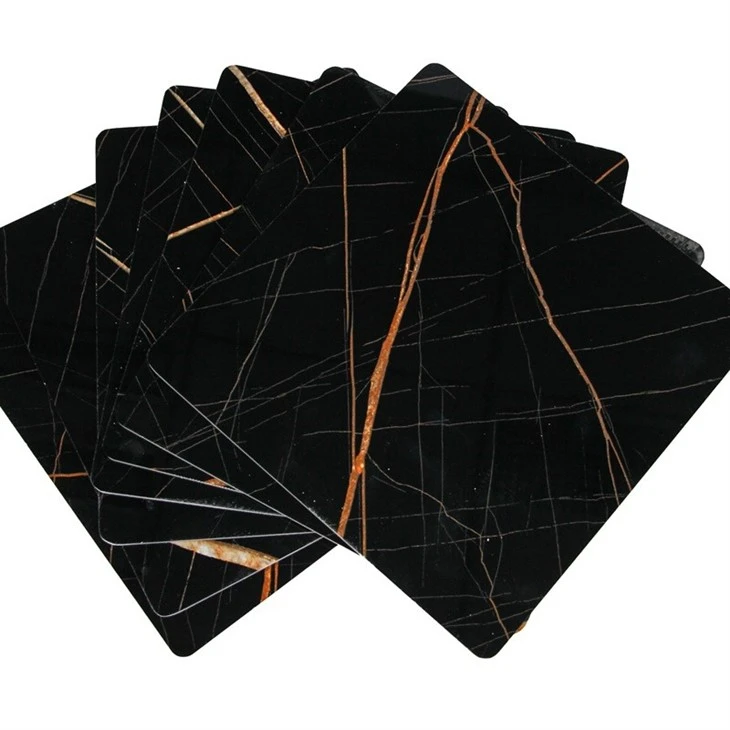
Before we discuss their impact on air quality, let's first understand what UV PVC marble sheets are. These sheets are made from polyvinyl chloride (PVC), a synthetic plastic polymer. The "UV" in UV PVC marble sheets refers to a special ultraviolet (UV) coating applied to the surface. This coating enhances the sheet's durability, scratch resistance, and colorfastness, making it suitable for various indoor applications, such as wall panels, ceiling tiles, and furniture surfaces.
Potential Emissions from UV PVC Marble Sheets
Like many building materials, UV PVC marble sheets can potentially emit volatile organic compounds (VOCs) into the indoor environment. VOCs are organic chemicals that have a high vapor pressure at room temperature, which allows them to easily evaporate into the air. Some common VOCs emitted by building materials include formaldehyde, benzene, toluene, and xylene.
The emission of VOCs from UV PVC marble sheets can occur during two main stages: during the manufacturing process and after installation. During manufacturing, some of the chemicals used in the production of PVC and the UV coating may not fully react or may be present in excess, leading to their release into the air. After installation, the sheets can continue to emit VOCs as they age and degrade over time.
Factors Affecting VOC Emissions
Several factors can influence the amount of VOCs emitted by UV PVC marble sheets:
- Quality of raw materials: The quality of the PVC resin and the UV coating used in the production of the sheets can have a significant impact on VOC emissions. Higher-quality materials are generally formulated to have lower levels of VOCs.
- Manufacturing process: The manufacturing process also plays a crucial role in determining the final VOC content of the sheets. Proper curing and ventilation during production can help reduce the amount of residual VOCs in the finished product.
- Installation conditions: The way the sheets are installed can affect VOC emissions. For example, if the sheets are glued or sealed using adhesives that contain high levels of VOCs, this can increase the overall VOC concentration in the indoor air.
- Environmental conditions: Temperature, humidity, and ventilation can all influence the rate of VOC emissions. Higher temperatures and humidity levels can accelerate the evaporation of VOCs, while proper ventilation can help remove them from the indoor environment.
Impact on Indoor Air Quality
The presence of VOCs in indoor air can have several negative effects on human health. Short-term exposure to high levels of VOCs can cause symptoms such as headaches, dizziness, nausea, and irritation of the eyes, nose, and throat. Long-term exposure to certain VOCs, such as formaldehyde and benzene, has been linked to more serious health problems, including respiratory diseases, cancer, and damage to the central nervous system.
However, it's important to note that the actual impact of UV PVC marble sheets on indoor air quality depends on several factors, including the amount of sheets used, the ventilation rate in the room, and the sensitivity of the occupants. In most cases, if the sheets are installed in a well-ventilated area and the quality of the products is high, the VOC emissions are likely to be within acceptable limits.

Measuring and Controlling VOC Emissions
To ensure that UV PVC marble sheets meet indoor air quality standards, it's important to measure and control their VOC emissions. There are several methods available for measuring VOC emissions, including chamber testing and field sampling. Chamber testing involves placing a sample of the material in a sealed chamber and measuring the concentration of VOCs in the air over a period of time. Field sampling involves collecting air samples from the indoor environment using specialized equipment and analyzing them in a laboratory.
To control VOC emissions from UV PVC marble sheets, manufacturers can take several steps, such as using low-VOC raw materials, optimizing the manufacturing process, and providing proper ventilation during installation. Consumers can also play a role in reducing VOC exposure by choosing high-quality products, ensuring proper ventilation in the room, and allowing the sheets to off-gas for a period of time before moving into the space.
Our Commitment to Indoor Air Quality
As a supplier of UV PVC marble sheets, we are committed to providing our customers with products that meet the highest standards of quality and safety. We work closely with our manufacturers to ensure that our sheets are made from high-quality raw materials and are produced using environmentally friendly processes. We also conduct regular testing to monitor the VOC emissions of our products and ensure that they comply with relevant indoor air quality standards.
In addition to providing high-quality products, we also offer our customers comprehensive support and advice on indoor air quality. Our team of experts can help you choose the right products for your project, provide guidance on installation and maintenance, and offer solutions for improving indoor air quality.
Conclusion
UV PVC marble sheets are a popular and versatile choice for interior decoration, but their impact on indoor air quality is an important consideration. While these sheets can potentially emit VOCs, the actual impact depends on several factors, including the quality of the products, the installation conditions, and the environmental factors. By choosing high-quality products, ensuring proper ventilation, and taking other measures to control VOC emissions, it's possible to minimize the negative effects of UV PVC marble sheets on indoor air quality.
If you're interested in learning more about our Flex PVC Marble Sheet, Marble PVC Wall Panel, or Marble Effect PVC Panel, or if you have any questions about indoor air quality, please don't hesitate to contact us. We look forward to working with you to create a beautiful and healthy indoor environment.
References
- American Society for Testing and Materials (ASTM). (2019). Standard test method for determining the emission rate of volatile organic compounds from indoor materials/products using small environmental chambers. ASTM D6330-19.
- Environmental Protection Agency (EPA). (2021). Indoor air quality. Retrieved from https://www.epa.gov/indoor-air-quality-iaq
- World Health Organization (WHO). (2010). Guidelines for indoor air quality: selected pollutants. Retrieved from https://www.who.int/publications/i/item/9789241547905