

What is the sound absorption coefficient of pu stone panels?
Sep 10, 2025
Leave a message
As a supplier of PU stone panels, I often get asked about the sound absorption coefficient of these innovative building materials. In this blog post, I'll delve into what the sound absorption coefficient is, how it applies to PU stone panels, and why it matters in various applications.
Understanding the Sound Absorption Coefficient
The sound absorption coefficient is a measure of how effectively a material can absorb sound energy. It is expressed as a value between 0 and 1, where 0 represents a material that reflects all sound (like a hard, smooth surface such as glass or metal) and 1 represents a material that absorbs all sound (an idealized situation). For example, a material with a sound absorption coefficient of 0.8 at a certain frequency means that it absorbs 80% of the sound energy at that frequency and reflects the remaining 20%.
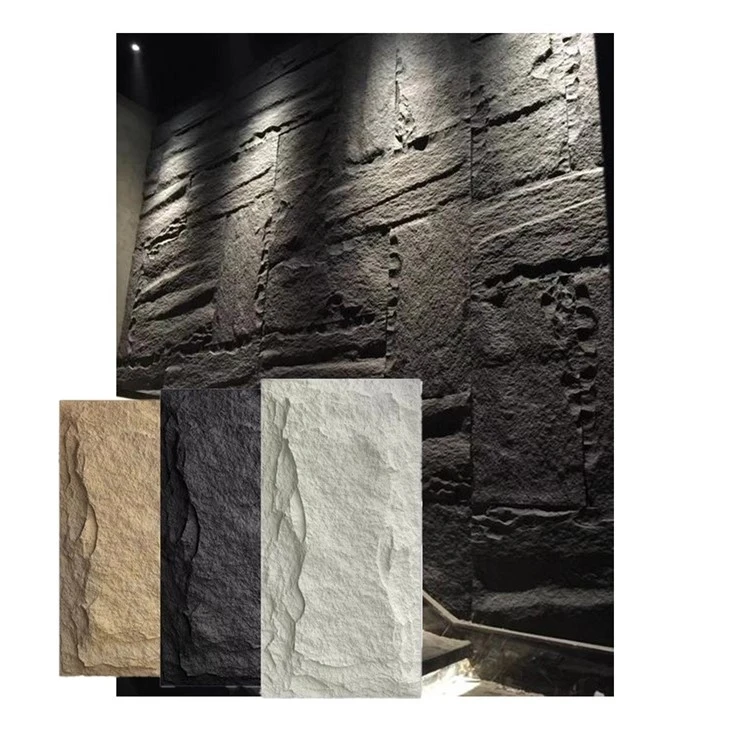
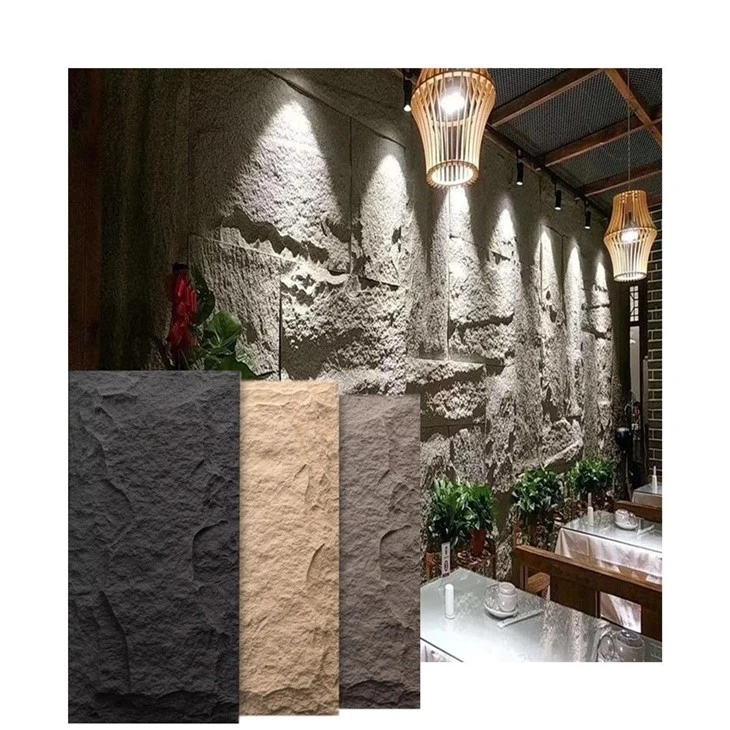
Sound absorption is crucial in many environments. In residential settings, it can reduce noise transmission between rooms, creating a more peaceful living space. In commercial buildings like offices, restaurants, and theaters, proper sound absorption can improve acoustics, making it easier to communicate and enjoy the space. Industrial facilities also benefit from sound - absorbing materials to protect workers from excessive noise.
Sound Absorption in PU Stone Panels
PU stone panels, or Polyurethane Stone Wall Panel, are made from polyurethane, a versatile polymer. The unique cellular structure of polyurethane gives these panels some inherent sound - absorbing properties.
The cellular structure of PU stone panels acts like a series of small chambers. When sound waves hit the panel, they enter these chambers. Inside the chambers, the sound waves bounce around, causing friction between the air molecules and the walls of the cells. This friction converts the sound energy into heat energy, effectively absorbing the sound.
However, the sound absorption coefficient of PU stone panels can vary depending on several factors.
Density
The density of the PU stone panel plays a significant role in its sound - absorbing capabilities. Generally, higher - density panels tend to have better sound absorption at lower frequencies. This is because the denser material provides more resistance to the movement of sound waves, allowing for more effective conversion of sound energy into heat. On the other hand, lower - density panels may be more effective at higher frequencies as they are more flexible and can respond better to the rapid oscillations of high - frequency sound waves.
Thickness
Thicker PU stone panels usually have a higher sound absorption coefficient. A thicker panel provides more distance for the sound waves to travel through the cellular structure, increasing the chances of the sound energy being absorbed. For example, a 2 - inch thick PU stone panel may have a significantly higher sound absorption coefficient than a 1 - inch thick panel, especially at lower frequencies.
Surface Treatment
The surface treatment of the PU stone panel can also affect its sound absorption. Textured surfaces can increase the surface area available for sound waves to interact with, enhancing the absorption. For instance, a panel with a rough, irregular surface will scatter the sound waves, increasing the probability of them entering the cellular structure and being absorbed.
Measuring the Sound Absorption Coefficient of PU Stone Panels
To accurately determine the sound absorption coefficient of PU stone panels, standardized testing methods are used. One of the most common methods is the reverberation room method. In this method, the panel is placed in a reverberation room, which is a room with highly reflective walls, ceiling, and floor. A sound source is used to generate a known sound signal in the room. The decay of the sound energy in the room is measured with and without the test panel. By comparing the decay times, the sound absorption coefficient of the panel can be calculated.
Another method is the impedance tube method. This method is used to measure the sound absorption coefficient at normal incidence. A small sample of the PU stone panel is placed at one end of an impedance tube, and a sound source is placed at the other end. Microphones are used to measure the incident and reflected sound waves, and the absorption coefficient is calculated based on the ratio of the absorbed sound energy to the incident sound energy.
Applications Based on Sound Absorption
Residential Buildings
In homes, Faux Stone Polyurethane Panel can be used in various rooms to improve acoustics. For example, in bedrooms, these panels can reduce the noise from outside traffic or other rooms, providing a more peaceful sleeping environment. In home theaters, PU stone panels can absorb the sound reflections, enhancing the audio quality and making the viewing experience more immersive.
Commercial Buildings
Commercial spaces such as offices benefit from the sound - absorbing properties of PU stone panels. They can reduce the noise from conversations, office equipment, and foot traffic, creating a more productive work environment. Restaurants can use these panels to improve the dining experience by reducing the overall noise level, making it easier for customers to talk. Theaters and auditoriums can also utilize PU stone panels to control the sound reflections, ensuring that the sound is evenly distributed throughout the space.
Industrial Facilities
In industrial settings, noise can be a significant problem for workers' health and safety. PU stone panels can be installed on the walls and ceilings of factories and workshops to absorb the noise generated by machinery. This not only protects the workers from excessive noise but also helps to meet the noise regulations set by local authorities.
Comparing PU Stone Panels with Other Sound - Absorbing Materials
When compared to traditional sound - absorbing materials such as fiberglass and mineral wool, PU stone panels have several advantages.
Aesthetics
PU stone panels offer a more aesthetically pleasing option. They can be designed to mimic the look of natural stone, such as granite, marble, or limestone. This makes them a great choice for applications where appearance is important, such as in high - end residential and commercial buildings. In contrast, fiberglass and mineral wool often have a less attractive appearance and may require additional finishing to be used in visible areas.
Installation
PU stone panels are relatively easy to install. They are lightweight, which reduces the installation time and labor costs. They can be cut to size using common tools and can be attached to walls and ceilings using adhesives or mechanical fasteners. Fiberglass and mineral wool, on the other hand, may require more complex installation procedures and special equipment.
Durability
PU stone panels are more durable than some traditional sound - absorbing materials. They are resistant to moisture, mold, and pests, which makes them suitable for use in a wide range of environments. Fiberglass and mineral wool can be damaged by moisture, which can reduce their sound - absorbing properties over time.
Conclusion
The sound absorption coefficient of PU stone panels is an important characteristic that makes them a versatile building material. Their unique cellular structure, combined with the ability to control factors such as density, thickness, and surface treatment, allows for a range of sound - absorbing capabilities. Whether it's for residential, commercial, or industrial applications, Faux Stone Wall Panel offer an aesthetically pleasing, easy - to - install, and durable solution for sound control.
If you're interested in learning more about the sound absorption properties of our PU stone panels or would like to discuss a potential project, I encourage you to reach out. We're here to help you find the best solution for your sound - control needs.
References
- Beranek, Leo L. "Acoustics." American Institute of Physics, 1954.
- Craik, R. J. M. "The Handbook of Polyurethanes." Wiley, 2007.
- ISO 354:2003, "Acoustics - Measurement of sound absorption in a reverberation room."
- ASTM C384 - 04(2017), "Standard Test Method for Normal Incidence Sound Absorption and Impedance in a Tube."