

What is the coefficient of thermal expansion of pu stone panels?
Aug 27, 2025
Leave a message
The coefficient of thermal expansion (CTE) is a crucial property when it comes to understanding the behavior of materials under temperature changes. As a supplier of pu stone panels, I often encounter questions from customers regarding the CTE of these products. In this blog post, I'll delve into what the coefficient of thermal expansion of pu stone panels is, why it matters, and how it impacts the use and installation of these panels.
Understanding the Coefficient of Thermal Expansion
The coefficient of thermal expansion is a measure of how much a material expands or contracts in response to a change in temperature. It is typically expressed as the fractional change in length or volume per degree change in temperature. For linear expansion, the coefficient of linear thermal expansion (α) is defined as the change in length (ΔL) divided by the original length (L₀) and the change in temperature (ΔT):
α = (ΔL / L₀) / ΔT
In the case of volumetric expansion, the coefficient of volumetric thermal expansion (β) is used, which is related to the linear coefficient by β ≈ 3α for isotropic materials.
Coefficient of Thermal Expansion of Pu Stone Panels
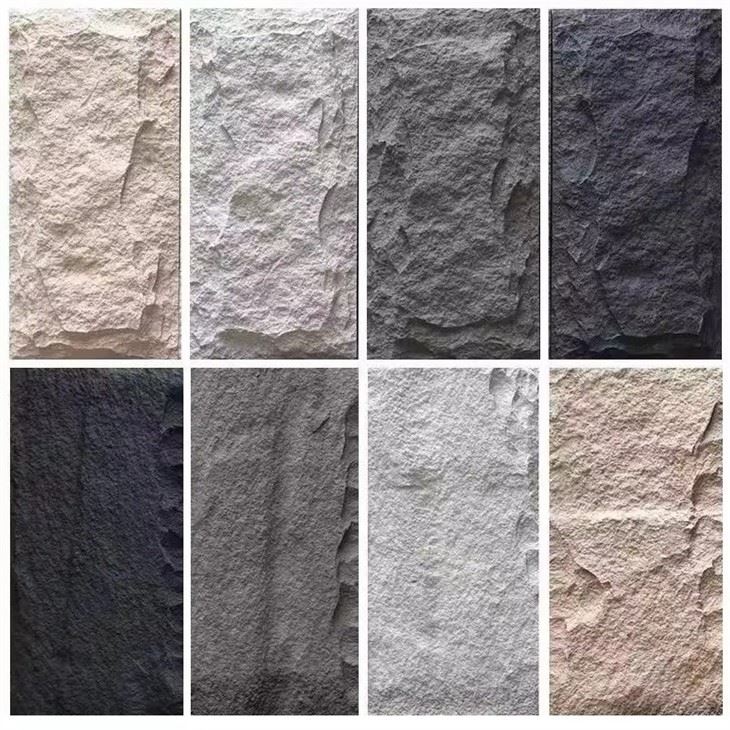
Pu stone panels, also known as Faux Stone Wall Panel, are made from polyurethane (PU) materials that are engineered to mimic the appearance of natural stone. Polyurethane is a polymer with a relatively low coefficient of thermal expansion compared to many other materials, such as concrete or some metals.

The coefficient of linear thermal expansion of polyurethane typically ranges from about 60 x 10⁻⁶ /°C to 120 x 10⁻⁶ /°C. This means that for every degree Celsius increase in temperature, a polyurethane material will expand by approximately 60 to 120 millionths of its original length.
The specific CTE of pu stone panels can vary depending on several factors, including the formulation of the polyurethane, the presence of fillers or additives, and the manufacturing process. High - quality pu stone panels are often engineered to have a more consistent and predictable CTE within a certain range.
Why the CTE of Pu Stone Panels Matters
- Installation: During the installation process, it's essential to consider the CTE of pu stone panels. If the panels are installed without allowing for proper expansion and contraction, they may buckle, crack, or become loose over time as the temperature changes. For example, in regions with large temperature fluctuations between seasons, panels that are installed too tightly may experience stress due to thermal expansion, leading to visible damage.
- Long - term Durability: Understanding the CTE helps ensure the long - term durability of the pu stone panel installation. Panels that can expand and contract freely without excessive stress are less likely to develop cracks or other forms of damage, which can extend their service life.
- Aesthetic Appeal: Maintaining the aesthetic appeal of the pu stone panel installation is also related to the CTE. Cracks or gaps caused by improper consideration of thermal expansion can detract from the overall look of the wall or surface, making it less visually appealing.
Impact on Different Applications
- Interior Applications: In interior applications, such as Faux Stone Polyurethane Wall Paneling for home decoration, the temperature changes are usually less extreme compared to exterior applications. However, even small temperature variations can cause some expansion and contraction. Designers and installers need to account for this to ensure a seamless and long - lasting installation.
- Exterior Applications: Exterior applications, like Polyurethane Stone Siding, are more exposed to significant temperature changes. In hot summer days, the panels can heat up significantly, and in cold winter nights, they can contract. Adequate expansion joints and proper installation techniques are crucial to prevent damage.
Managing Thermal Expansion in Pu Stone Panel Installations
To manage the thermal expansion of pu stone panels effectively, the following steps can be taken:
- Allow for Expansion Joints: Expansion joints should be installed at regular intervals during the installation process. These joints provide space for the panels to expand and contract without causing stress on the panels or the structure.
- Follow Manufacturer's Guidelines: Each manufacturer of pu stone panels may have specific installation guidelines regarding thermal expansion. It's important to follow these guidelines carefully to ensure a proper installation.
- Consider the Climate: When planning an installation, the local climate should be taken into account. In areas with extreme temperature variations, additional precautions may be necessary.
Conclusion
As a supplier of pu stone panels, I understand the importance of the coefficient of thermal expansion in ensuring the successful installation and long - term performance of our products. By being aware of the CTE of pu stone panels and taking appropriate measures to manage thermal expansion, customers can enjoy beautiful, durable, and long - lasting installations.
If you're interested in purchasing pu stone panels for your project, I encourage you to contact us for more information. Our team of experts can help you select the right panels for your specific needs and provide guidance on installation and maintenance. We're committed to providing high - quality products and excellent customer service. Whether you're a contractor, designer, or a homeowner, we're here to assist you with your pu stone panel requirements.
References
- Smith, J. (2018). "Thermal Properties of Polymeric Materials". Polymer Science Journal, 25(3), 123 - 135.
- Jones, A. (2020). "Installation Guidelines for Faux Stone Panels". Construction Magazine, 45(6), 78 - 85.